
Chery Unveils Rhinoceros S Solid-State Battery, Pilot Line Planned for 2027
On October 20, 2026, Chery announced progress in its Rhinoceros battery technology at the 2026 Chery Global Innovation Conference. The Rhinoceros S all-solid-state battery is reported to deliver an energy density of 400 Wh/kg, operate across a temperature range of -40°C to 100°C, and pass rigorous safety tests. Its dedicated pilot line is planned to enter production in 2027. From an industry perspective, the announcement may affect how battery manufacturers, material suppliers, procurement teams, testing organizations, and downstream buyers assess technical documentation, safety validation, supplier qualification, and future delivery readiness. The information currently represents a commercialization signal that still requires continued observation of applicable rules, certification practices, and market execution.
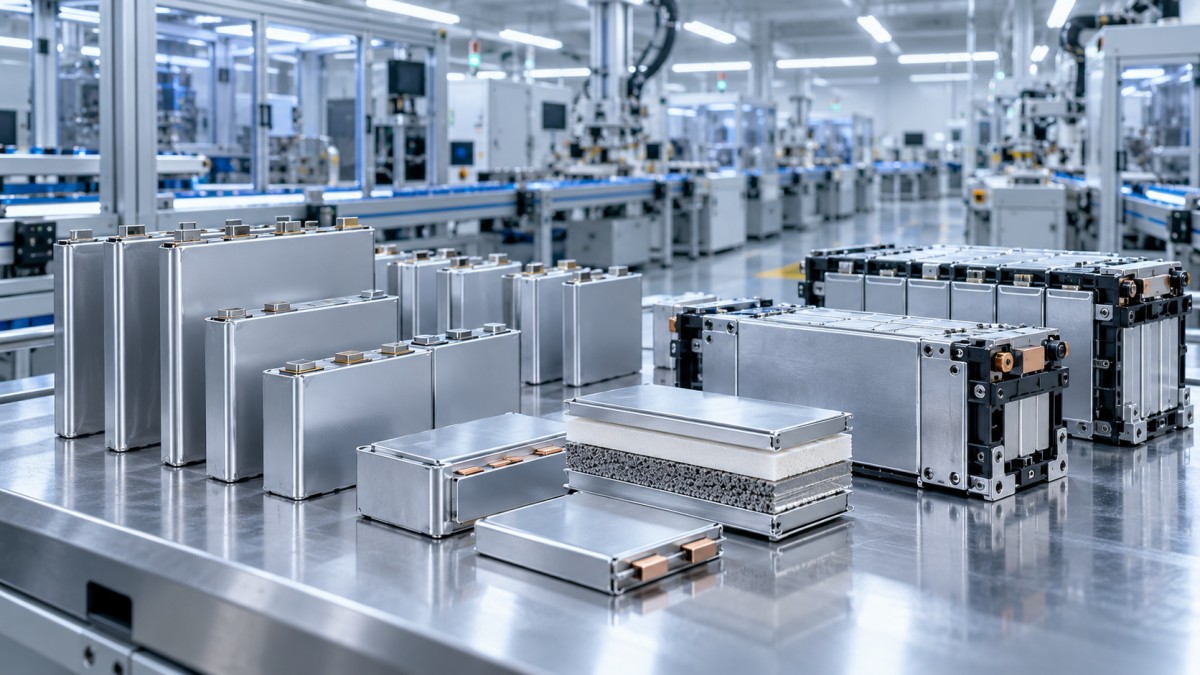
Chery Sets Out a Defined Step Toward Solid-State Battery Production
According to the supplied information, Chery disclosed the latest progress of its Rhinoceros battery technology on October 20, 2026, at the 2026 Chery Global Innovation Conference.
The Rhinoceros S all-solid-state battery has an energy density of 400 Wh/kg and supports a wide operating temperature range from -40°C to 100°C. The battery has also passed rigorous safety tests. Chery plans to build and put into operation a dedicated pilot line in 2027, marking a further step in its stated path toward solid-state battery commercialization.
Why the Pilot Line Could Change Commercial Readiness Assessments
Material and component suppliers may face earlier technical verification
Analysis suggests that a dedicated pilot line could increase the importance of traceable material specifications, process consistency, and technical documentation for companies supplying materials or components to solid-state battery projects. The supplied information does not identify specific materials, suppliers, or procurement standards, so the practical requirements remain subject to later technical and commercial confirmation. Potentially affected documents may include product specifications, test records, quality controls, and change management records.
Manufacturing partners will need to align process and delivery expectations
For battery processing, equipment, and manufacturing partners, the planned 2027 pilot line may create a need to review equipment interfaces, process validation, production ramp-up assumptions, and delivery schedules. This is an industry observation rather than a confirmed requirement. Companies may need to distinguish between laboratory or engineering-stage performance and the documentation required for repeatable pilot production before making procurement or capacity commitments.
Testing and certification work may become more central to market access
The announcement states that the Rhinoceros S battery passed rigorous safety tests, but it does not provide the test standards, certification documents, testing bodies, or applicable market requirements. Therefore, buyers and certification-related businesses should avoid treating the announcement as evidence of a completed certification process. At this stage, the key issue is whether later technical documents establish the test scope, operating conditions, acceptance criteria, and recognition of the results in the relevant business or market context.
Downstream buyers may need to reassess technical bid and delivery assumptions
From a procurement perspective, the reported energy density and wide temperature range could lead some buyers to examine whether future product specifications, supplier qualification criteria, and technical bid documents should accommodate solid-state battery solutions. Any such impact remains a possibility, since the input does not confirm commercial deliveries, customer adoption, tender changes, or formal purchasing rules. Procurement teams may nonetheless consider how to verify performance claims, safety evidence, warranty terms, and delivery milestones if the technology proceeds toward pilot production.
Practical Points for Compliance, Procurement, and Supply Chain Teams
Separate performance claims from recognized compliance evidence
Companies evaluating the announcement should record the stated technical indicators separately from formal compliance evidence. The available information confirms an energy density of 400 Wh/kg, a temperature range of -40°C to 100°C, and completion of rigorous safety tests, but it does not identify the relevant standards, reports, certificates, or test organizations. Internal reviews should therefore focus on obtaining and verifying the underlying technical and safety documentation before relying on the information in procurement, certification, or delivery decisions.
Monitor later technical documents and execution language
The planned 2027 pilot line should currently be treated as a stated production plan. Companies may wish to monitor subsequent official descriptions of the line, its production status, product scope, validation results, and delivery arrangements. These details could affect supplier qualification, purchase planning, technical specifications, and the timing of customer commitments.
Review supplier files and traceability requirements in advance
Where a company may participate in future solid-state battery procurement or supply, it could assess whether its supplier files contain sufficient information on material origin, batch records, quality inspection, process changes, and test data. These are preparation measures rather than confirmed obligations arising from the announcement. The purpose is to reduce uncertainty if later qualification, audit, or delivery reviews require more detailed evidence.
Keep trade and service assumptions open until market rules are clearer
The input does not specify export markets, trade measures, customs treatment, warranty arrangements, or after-sales requirements. Exporters, logistics providers, and service partners should therefore avoid assuming that the reported battery performance automatically determines trade eligibility or delivery conditions. Later information on market requirements, technical documentation, product classification, and service responsibilities may be needed before cross-border or large-scale commercial planning can be finalized.
What the Announcement Signals at This Stage
From an industry perspective, the announcement is best understood as a commercialization and execution signal rather than confirmation that a complete regulatory or certification framework has already been implemented. The planned pilot line gives the technical disclosure a clearer production-oriented context, while the absence of specific standards, certification details, market destinations, and delivery arrangements leaves important implementation questions open.
Future judgment will likely depend on whether subsequent information clarifies the pilot line's operational progress, the scope of safety validation, the documentation supporting the reported performance, and the requirements applied by buyers or relevant markets. Industry participants may also need to watch for changes in technical bid documents, supplier qualification practices, certification interpretation, trade execution, and customer feedback.
How to Read the 2027 Pilot-Line Plan
The most balanced interpretation is that Chery has reported a defined next step toward solid-state battery commercialization, supported by stated performance indicators and safety-test results. The information does not yet establish completed commercial deployment, formal certification recognition, or a confirmed change to industry regulations or trade rules. Companies involved in materials, equipment, testing, procurement, logistics, and after-sales support can treat the announcement as a reason to review readiness and evidence requirements while continuing to verify later execution details.
Basis of This Report and Items Requiring Further Verification
This article was generated from the supplied information comprising the news title, the event date of October 20, 2026, and the event summary concerning Chery's Rhinoceros S all-solid-state battery and planned 2027 pilot line. No specific official source link was provided in the input.
For continued verification, readers should follow later official announcements, regulatory publications, customs or trade authority information, industry association materials, standards organization documents, and authoritative media reports where relevant. Policy details, certification execution practices, tender-document changes, trade implementation, industry feedback, and the company's actual pilot-line execution remain matters for further observation.
Facing technical bottlenecks in manufacturing or looking for more efficient industrial solutions? Leave your details below and let the engineering experts at G-MDI solve them for you.
We respect your privacy. Your information is strictly confidential.
Recommended News
- Logic & Memory ICs (7nm/sub-7nm)Indian Minister Calls for Domestic Semiconductor Machinery and Precision ComponentsIndia’s semiconductor machinery and precision components push could reshape sourcing. Discover what the minister’s call means for suppliers and buyers.
- Logic & Memory ICs (7nm/sub-7nm)Automotive Technology Platforms in North America: What Do They Offer?Explore what an automotive technology platform in North America offers, from connected vehicles and EV charging to software, safety and deployment.
- Logic & Memory ICs (7nm/sub-7nm)GlobalFoundries Breaks Ground on $10 Billion New York Semiconductor FabGlobalFoundries breaks ground on a $10 billion New York semiconductor fab. Explore its planned 2029 production and potential supply chain impact.
- Industrial Smart WearablesIndustrial Smart Wearables: How to Evaluate Safety and ConnectivityIndustrial Technology Information Platform insights help you evaluate smart devices for workplace safety, connectivity and reliable response. Explore the guide.
- Logic & Memory ICs (7nm/sub-7nm)Samsung Starts Onyang HBM Packaging Plant, Moving Production Up to 2028Samsung's Onyang HBM packaging plant targets mass production in June 2028. Explore what the accelerated schedule could mean for suppliers and buyers.
- Logic & Memory ICs (7nm/sub-7nm)Choosing a Telecom Infrastructure Monitoring Platform: Key Evaluation CriteriaCompare telecommunications infrastructure platform monitoring solutions by coverage, interoperability, security, scalability, and real-world performance.