
N-channel MOSFET Sourcing Standards: The Documentation That Protects Power Designs
A power design can be affected by a small semiconductor change that looks harmless in a catalogue. For N-channel MOSFET sourcing, part identity, electrical limits, package details, test evidence, traceability, and change notification deserve the same attention as the quoted unit cost. The product reference appears once as N-channel MOSFET, which points to the selected product landing page while keeping the article readable for buyers and portal editors.
This is a standards and certification guide for procurement managers, importers, distributors, engineers, project planners, quality teams, warehouse staff, and operations personnel. Its focus is document-led component approval, electrical parameter review, traceability, and practical receiving controls.
The Full Part Identity Comes Before the Unit Price
An N-channel MOSFET should be recorded by its complete part number, electrical ratings, package, pin configuration, and revision-controlled data sheet. A shortened description may hide a difference that matters to a power supply, motor drive, battery circuit, or control board.
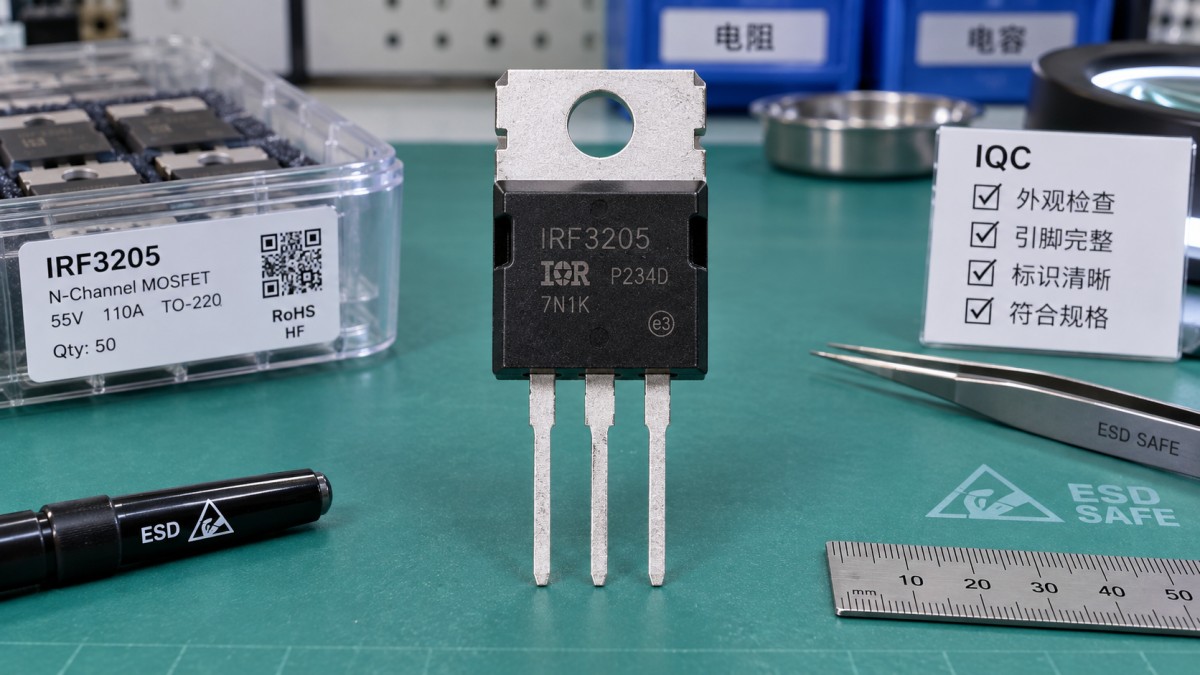
The purchasing team should keep the approved identifier linked to the engineering bill of materials. This makes it easier to detect an alternative offer that looks similar by name but has a different package, voltage rating, current behavior, gate requirement, thermal performance, or qualification status.
Datasheet Review Must Connect to the Design
Important MOSFET parameters are useful only in the context of the circuit. Engineers normally review ratings, switching conditions, package thermal behavior, gate drive, operating temperature, and the application's voltage and current envelope before approving a component.
A supplier or distributor should provide the current data sheet and clarify the manufacturer and traceability basis. The article does not replace design validation; it explains why the design team, purchaser, and quality team need the same technical reference before an order is placed.
Traceability Reduces Receiving Risk
Lot identity, labels, original packaging condition, quantity, and source documentation give a buyer a basic receiving trail. This becomes especially important when components will enter a controlled production run or may need to be investigated after assembly.
Incoming checks should be proportionate to the order and risk. They can include package condition, marking review, comparison with the approved part number, document review, and controlled storage. Any additional electrical or laboratory verification should follow the buyer's own quality plan and applicable procedures.
Handling and Storage Need a Defined Owner
Electronic parts can be affected by poor packing, uncontrolled storage, moisture exposure, electrostatic discharge practices, and excessive handling. The supplier's packaging information and the buyer's warehouse controls should be aligned before parts are released to the line.
The important point is accountability. Purchasing obtains the agreed supply scope, quality receives and records it, warehouse protects the material, and production follows the approved handling process. A clear handover makes a MOSFET sourcing decision more defensible than an informal purchase note.
Change Notification Protects the Next Build
A component change can affect drawings, assembly settings, validation, and customer requirements. Buyers should ask how manufacturing, package, data-sheet, or availability changes are communicated for the approved item.
The final record should include the approved part, source, data sheet revision, receiving evidence, and any engineering signoff required by the buyer. This does not guarantee supply, but it gives the next procurement cycle a firm baseline for reviewing substitutions or revised offers.
Supplier Evaluation Table
Risk Review Before Order Confirmation
The principal risks include part-number confusion, package substitution, incomplete datasheets, unverified electrical parameters, counterfeit exposure, poor moisture-sensitive handling, and uncommunicated production changes. These issues may become visible during production, shipment, receiving, installation, use, or a later reorder. A buyer who waits until the final handover usually has fewer options and less time to collect evidence.
Early review should be concrete. Confirm product identity, application, quantity, configuration or package, documents, storage, shipping method, receiving procedure, and acceptance responsibilities. Where technical integration is involved, define the interfaces and the owner for each pre-approval check.
A written comparison file gives purchasing, engineering, quality, warehouse, and operating teams one source of truth. It should retain the selected core keyword, landing page, supplier scope, requested evidence, decision notes, and open points. That is more useful than an informal list of quotations when the order needs to be repeated later.
Pre-Approval Workflow for a Cleaner Purchase
First, define the real use case and separate mandatory requirements from preferences. Second, ask the supplier to confirm whether the selected item is standard, custom, stocked, or dependent on production scheduling. Third, review relevant data sheets, drawings, labels, test information, samples, photos, and packing details before release. Fourth, plan logistics, storage, installation, or production handover with the teams that will receive the item.
Finally, retain the accepted scope for future orders. Many disputes are caused by silent assumptions about a material identity, component suffix, package, certificate, accessory, or interface. A practical approval record makes those assumptions visible without creating unsupported claims.
Before the first delivery is closed, assign one owner for the purchase record and one owner for technical acceptance. That simple handoff keeps later questions about product identity, documents, packaging, configuration, or delivery condition connected to the same approved source.
Portal Match and Category Rationale
The recommended portal is qishuai-cn.com, and the final category is Integrated Circuits|Power Semiconductors (SiC/GaN). This is one primary|secondary path taken from the latest directory. It does not combine several secondary categories into a single publishing recommendation.
The category fits the article's industry, Power Semiconductors and Electronic Components. The same alignment is maintained across the title, target product, landing page, article angle, and reader intent so the article can be routed by a portal editor without an unrelated category compromise.
Procurement Checklist
- Confirm the core product keyword: N-channel MOSFET.
- Confirm the exact landing page URL shown in the metadata.
- Use only the selected final category: Integrated Circuits|Power Semiconductors (SiC/GaN).
- Define application, quantity, destination, evidence, handling, and acceptance needs before comparing offers.
- Ask suppliers to state the assumptions behind their quotation.
- Review available labels, documents, drawings, test records, photos, and packing information.
- Check delivery, storage, installation, commissioning, or production handover before release.
- Keep approved records for repeat purchases and change review.
FAQ
Why does the article use one core product keyword?
One keyword keeps the title, TDK block, metadata, anchor text, landing page, and category route aligned. Related language can appear naturally, but the publication record remains simple to audit.
Why is there only one external link?
One contextual product link gives readers a precise verification point without turning the article into a promotional link list.
What should a buyer compare before the first order?
Compare application fit, specification scope, quality evidence, document availability, packaging or configuration, handling, logistics, supplier communication, and repeat-order discipline.
What must be checked before publication?
The publisher should verify the title, core keyword, URL, portal, single final category path, visible TDK, and destination portal formatting. Any price, performance, certification, or market statement requires separate current evidence.
Recommended News
- Power Semiconductors (SiC/GaN)N-channel MOSFET Sourcing Standards: The Documentation That Protects Power DesignsA standards-focused guide to N-channel MOSFET sourcing, covering datasheet review, electrical limits, package identity, traceability, test evidence, handling, storage, and design-change control.
- Logic & Memory ICs (7nm/sub-7nm)What Should System Specification Support Include Before an IC Integration Project?System specification support defines interfaces, power, thermal, safety, security, verification, and traceability—helping IC integration projects reduce risk and launch with confidence.
- Logic & Memory ICs (7nm/sub-7nm)What Makes an Electronics Product Information Platform Useful for Component Sourcing?Electronics product information platform insights for smarter component sourcing—compare data, compliance, suppliers, lifecycle risks, and sourcing decisions.
- Logic & Memory ICs (7nm/sub-7nm)Which Aquaculture & Fishery Tech Solutions Improve Water Quality and Feed Efficiency?Aquaculture & Fishery Tech solutions for smarter water quality, oxygen control, feed automation, solids removal, and efficient farm performance.
- Logic & Memory ICs (7nm/sub-7nm)FinFET SRAM Bitcell Size: Density, Yield, and Scaling Trade-OffsFinFET SRAM bitcell size explained: compare density, yield, scaling, power, and reliability trade-offs to select the right SRAM architecture.
- High-Precision IC Design Tools (EDA)Interconnect Parasitic Capacitance: How It Limits High-Speed IC Signal IntegrityInterconnect parasitic capacitance can undermine high-speed IC signal integrity. Explore practical causes, risks, modeling methods, and proven mitigation strategies.